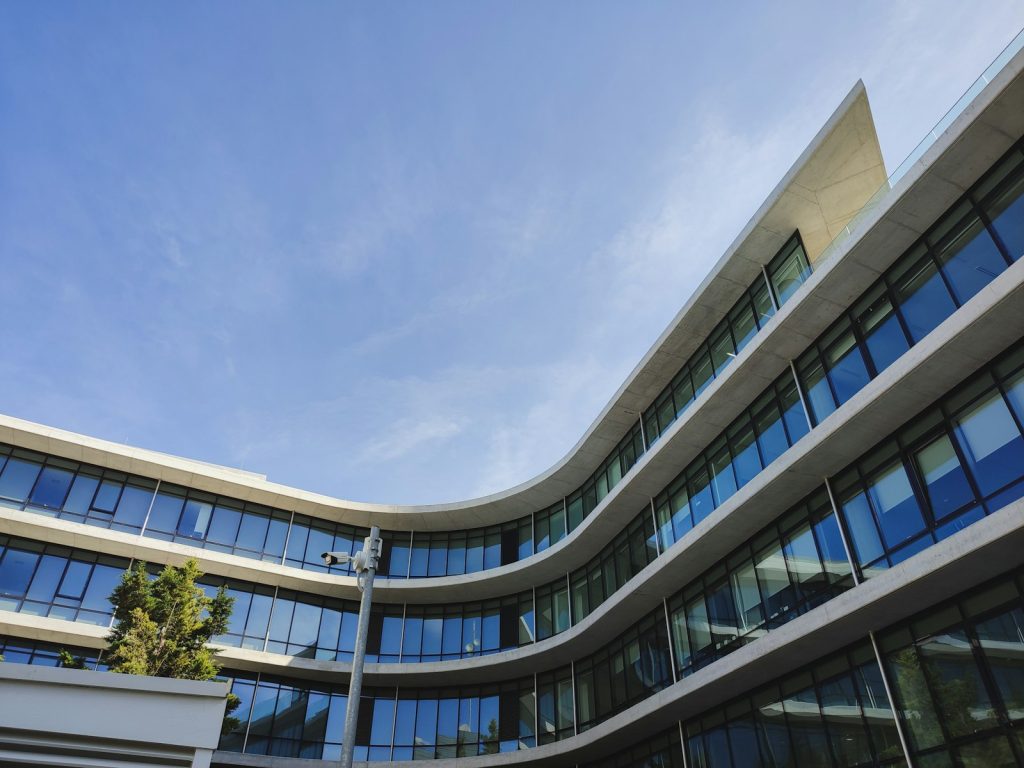
Bali International Hospital (BIH) is a 250-bed specialist hospital inside KEK Sanur — Indonesia’s health and medical-tourism Special Economic Zone in Denpasar Selatan, Bali — operated by PT Pertamina Bina Medika IHC (Indonesia Health Corporation), the healthcare subsidiary of the Pertamina group. President Jokowi broke ground on 27 December 2021, making BIH the first major clinical anchor for the zone and a centrepiece of the government’s strategy to redirect Indonesian patients who currently fly to Singapore, Penang, and Bangkok for high-acuity care. BIH’s own materials reference an April 2025 soft opening. If you reached this page searching bali international hospital, that is the factual baseline. The rest of this piece works through what the hospital actually offers, who runs it, what the Mayo Clinic link means, and how it fits the broader KEK Sanur ecosystem — with honest flags where the record is incomplete.
Groundbreaking, Timeline, and What Is Confirmed
The groundbreaking date — 27 December 2021 — is well-documented. President Jokowi attended in person; the event was covered by Antara and Kompas and appears in official Setkab records. Construction proceeded through the period when KEK Sanur’s designation was still being formalised (PP No. 41 Tahun 2022 was signed 1 November 2022, eleven months after the groundbreaking).
BIH’s own communications have cited April 2025 as the soft-opening date. A separate claim — that President Prabowo formally inaugurated the hospital in June 2025 — has circulated in Indonesian media but could not be confirmed against Setkab records or the major wire services at the time this page was written. This site does not publish inauguration dates or officiants without a verifiable primary source. The distinction matters: a soft opening and a presidential inauguration carry different implications for operational scale and political commitment. If this status has been updated since our last review, the Administrator KEK Sanur or IHC’s communications team (bih.id) will have the current picture.
What is not in dispute: BIH is a constructed, equipped clinical facility. IHC communications have described advanced oncology infrastructure including a 3-Tesla MRI, a linear accelerator (LINAC), and 3D brachytherapy capability — equipment that is genuinely scarce at the provincial level in Indonesia and that directly targets the outbound cancer-treatment segment.
Operator Profile: IHC and the Pertamina Health Network
PT Pertamina Bina Medika IHC is not a startup. It manages the healthcare network of the Pertamina group across Indonesia — a portfolio of hospitals, clinics, and health services built over decades to serve Pertamina employees and their families, and progressively expanded into the general market. Operating a complex specialist hospital with advanced oncology and neurology services is within IHC’s institutional competence in a way that it would not be for a greenfield entrant.
That context matters when assessing BIH’s credibility as a regional medical-tourism anchor. The hospital is not a speculative project by a property developer pivoting into healthcare. It is an IHC strategic flagship — the company’s most visible attempt to demonstrate that Indonesian public-sector-affiliated healthcare can compete for the high-value patient segment currently leaving the country. Whether it succeeds in that positioning depends on clinical track record, JCI accreditation progression, and the foreign-physician licensing environment, all of which are discussed below.
The broader developer context: KEK Sanur sits on land historically associated with Hotel Indonesia Natour and the InJourney hospitality group. IHC’s role is specifically the health cluster; the hospitality, convention, and commercial-arcade layers of the 41.26-hectare zone involve different entities. The Badan Usaha Pembangun dan Pengelola (BUPP — the statutory zone developer-manager under PP 40/2021) has been variously cited as PT Hotel Indonesia Natour. We flag the legal entity name as unverified; confirm at kek.go.id or the KEK Sanur authority page before citing it in a formal document.
Beds, Layout, and Centers of Excellence
BIH’s own published materials cite 250 beds. Some secondary sources have used 255; this page uses the 250 figure from BIH’s own communications, which is the authoritative source for hospital-specific capacity data.
Four formal Centers of Excellence (CONGO — Centers of Excellence) are stated in IHC materials:
- Oncology
- The most clinically significant centre relative to the medical-tourism demand thesis. Cancer treatment is the single largest driver of Indonesian outbound medical travel — patients go to Singapore and Penang precisely because Indonesian provincial hospitals lack linear accelerators and advanced radiation therapy. BIH’s reported LINAC, 3T MRI, and 3D brachytherapy capability directly address this gap. If the oncology centre reaches operational maturity with a clean track record, it changes the calculus for a meaningful share of Indonesian cancer patients.
- Neurology
- Complex neurology — stroke management, epilepsy, movement disorders, neurosurgery — requires a combination of advanced imaging, specialised ICU protocols, and experienced clinical staff that most Indonesian hospitals outside Jakarta cannot assemble. Including neurology as a Centre of Excellence positions BIH for the high-acuity segment rather than the low-complexity elective market.
- Cardiology
- Cardiac care is the second-largest driver of Indonesian outbound medical travel after oncology. Coronary interventions, valve surgery, and electrophysiology require equipment and volumes that are concentrated in a handful of Jakarta hospitals today. A 250-bed Bali facility with cardiac capability — plus the destination framing of a post-procedure recovery in Sanur — is a genuine differentiator versus a Jakarta hospital option for patients who prefer to combine treatment with recovery in a resort environment.
- Orthopedics
- Joint replacement, spine surgery, and sports medicine are procedure categories where quality differences between Indonesian and regional providers are smaller than in oncology or complex cardiac, but where the Bali recovery environment can still tip the decision. Orthopedics also has stronger international-patient appeal than the other three centres — Bali’s expatriate and long-stay visitor population generates a reliable demand base for elective orthopedic procedures.
This is a credible Centre of Excellence mix. Oncology and cardiology anchor the medical-necessity segment (patients who must travel for care); neurology and orthopedics broaden the base. Four specialties is a focused rather than sprawling offering, which is the right choice for a hospital still building its clinical reputation.
The Mayo Clinic Collaboration: What Is and Is Not Confirmed
A collaboration between BIH/IHC and Mayo Clinic was announced at the 27 December 2021 groundbreaking. The announcement generated significant coverage and has been cited in almost every article about KEK Sanur since. The questions worth asking — and that IHC has not comprehensively answered in publicly accessible primary documents — are: what exactly is the collaboration, and what is its current status?
Mayo Clinic’s international collaborations typically take several forms: knowledge-transfer and clinical protocols agreements, physician-training and education partnerships, quality standards and accreditation advisory arrangements, and (less commonly) operational or co-management roles. The BIH collaboration was announced as a MoU; the specific scope has not been confirmed in documents this site has reviewed. What the announcement does signal — and this is meaningful — is that IHC engaged Mayo Clinic at the level of a formal institutional relationship, not merely a marketing claim. Whether that relationship translates into clinical protocol integration or remains at the education-and-standards tier is the key question for any investor or patient evaluating BIH’s clinical credentials.
Our recommendation: if the Mayo Clinic relationship is material to your investment thesis or to a patient’s treatment decision, request primary confirmation from IHC. Do not rely on secondary sources, including this page, for the contractual specifics.
What BIH Anchors for the KEK Sanur Ecosystem
A hospital does not operate in isolation, and BIH’s role inside KEK Sanur goes beyond providing clinical services. Understanding its ecosystem function helps investors in adjacent sectors — wellness, medical devices, health tech, hospitality — assess where the demand flows.
KEK Sanur covers 41.26 hectares, designated under PP No. 41 Tahun 2022. The zone’s formal sectoral mandate pairs kesehatan (healthcare) with pariwisata (tourism). BIH is the healthcare anchor; the tourism layer is represented by the former Grand Inna Bali Beach site (repositioned as The Meru Sanur, reopening date unconfirmed), the Bali Beach Convention Center (a MICE facility; opening date unconfirmed in primary sources), and a planned ethnomedicinal botanical garden focusing on Indonesian traditional medicine. These assets are designed to work together: a patient arriving for a two-week oncology consultation can stay in the adjacent hotel, have family members use the convention centre’s facilities for business, and experience a recuperation environment that Singapore’s hospital districts simply cannot replicate.
The economic logic is explicit in the zone’s projections. By 2030, Kemenko Perekonomian projects the zone will capture 4 to 8 percent of the Indonesian cohort currently seeking treatment abroad — approximately 123,000 to 240,000 patients annually under those assumptions. By 2045, the projected cumulative impact is IDR 86 trillion in forex savings (patients not leaving the country) plus IDR 19.6 trillion in new forex from inbound international patients. These are 2022-era projections; they depend on BIH reaching clinical scale and on the broader zone’s hospitality and conventions infrastructure becoming operational. They are a directional statement of intent, not a guaranteed outcome.
As of mid-2026, KEK Sanur had attracted cumulative realized investment of IDR 5.37 trillion and 5,444 people employed — a significantly stronger trajectory than KEK Kura Kura’s IDR 1.62 trillion at the same point. BIH is the single largest reason for that gap in momentum.
For investors in health-adjacent sectors, BIH’s presence means several things in practice. A medical device company importing advanced diagnostic equipment into KEK Sanur can use the zone’s import-duty exemption and VAT non-collection facility. A health-tech company providing hospital information systems or telemedicine infrastructure can qualify as a zone pelaku usaha and access the same fiscal package. A wellness or integrative medicine operator can position its offer around the post-treatment recovery use case that BIH’s oncology and orthopedics patients represent. None of this would be viable without a functioning anchor hospital generating patient flow.
Thinking about a clinic, diagnostics centre, wellness facility, or health-tech operation inside the zone? Start a conversation with our team — we can point you to the right Administrator KEK Sanur contact and help you map the entry path before you commit to a site visit. WhatsApp works well if you want a quicker first exchange.
Fiscal Incentives for Health-Sector Operators at KEK Sanur
The tax and customs framework available to pelaku usaha (business actors / tenants) inside KEK Sanur follows the standard national KEK fiscal package under PMK 237/PMK.010/2020 as amended by PMK 33/PMK.010/2021. The headline numbers:
| Investment Scale (kegiatan utama) | CIT Holiday Duration | Post-Holiday Tail |
|---|---|---|
| IDR 100 billion – <500 billion | 10 years (100% CIT reduction) | 50% reduction for 2 additional years |
| IDR 500 billion – <1 trillion | 15 years (100% CIT reduction) | 50% reduction for 2 additional years |
| IDR 1 trillion and above | 20 years (100% CIT reduction) | 50% reduction for 2 additional years |
Beyond the tax holiday: VAT and PPnBM are not collected on imports into the zone, on deliveries from the domestic customs area into KEK Sanur, and on intangibles and services delivered to zone entities — covering capital goods, machinery, medical equipment, land and buildings. Import duties are exempted on qualifying goods entering the zone (duty applies if goods are moved to the domestic customs area). Regional taxes including BPHTB (land and building acquisition duty) and PBB are reduced by 50 to 100 percent via local government regulations under PP 40/2021 Article 100.
For investors below the IDR 100 billion threshold or for non-main activities, the tax allowance is available: 30 percent of investment deducted from net income over six years (5 percent per year), accelerated depreciation and amortisation, 10 percent dividend withholding tax to non-residents (or applicable treaty rate), and a 10-year loss carry-forward.
One important 2024 caveat for large multinationals: Indonesia’s Global Minimum Tax rules under PMK 136/2024 (Pillar Two, 15 percent GMT for MNE groups with consolidated revenue above EUR 750 million) can claw back tax-holiday value via a domestic top-up charge. The holiday remains formally in force for all investors; only in-scope MNE groups need to model the GMT interaction explicitly before committing.
KEK Sanur also offers sector-specific non-fiscal facilitation: easier licensing for foreign health workers (relevant for any operator whose clinical model depends on internationally trained physicians), and immigration facilitation for patients and accompanying family members. The legal framework for foreign-physician practice is more permissive inside KEK than under general Indonesian rules — but implementation depth, and the Indonesian Medical Association’s (IDI) historic resistance to broad foreign-physician practice, remains a real operational variable.
Full detail on the entry process, land rights, and realistic timelines is covered in our guide to setting up a clinic or health business inside KEK Sanur.
Benchmarking BIH Against Regional Competitors
No honest assessment of Bali International Hospital skips the regional comparison. The patients BIH is designed to attract are currently choosing between Penang General Hospital and Gleneagles Penang, Bangkok’s Bumrungrad and Samitivej, Singapore’s Mount Elizabeth and Raffles Medical, and Jakarta’s top-tier private hospitals. Each of those options has decades of patient-referral network, established insurance relationships, and clinical track records that BIH is only beginning to build.
| Factor | BIH, KEK Sanur | Penang cluster, Malaysia | Bangkok cluster, Thailand | Singapore cluster |
|---|---|---|---|---|
| Years of operation | Soft-opened ~2025 | 30–40 years | 40+ years | 50+ years |
| JCI accreditation | Not yet confirmed | Multiple hospitals | 20+ hospitals | Multiple hospitals |
| Advanced oncology (LINAC) | Reported; IHC communications | Standard across major hospitals | Standard across major hospitals | Standard across major hospitals |
| Destination premium | Strong — Bali is a global leisure brand | Moderate | Moderate | Low (city hospital context) |
| Cost relative to Singapore | Expected to be significantly lower | 30–50% lower than SG | 40–60% lower than SG | Benchmark |
| Operator experience | IHC — large Indonesian hospital group | Established regional groups | Listed healthcare groups | IHH, Parkway, Raffles |
The Bali destination premium is real and it is BIH’s most distinctive competitive edge. Recovering from a joint replacement or completing a radiation therapy course in Sanur rather than in a Penang suburb is a different experience — and for a segment of patients willing to pay for it, a meaningful one. The question is whether BIH’s clinical quality earns the confidence of international insurers and patient coordinators, the gatekeepers who drive referral volumes. That is a multi-year process. Three to seven years is a reasonable range for a greenfield specialist hospital to reach operational maturity and begin building a referral network that competes seriously with established incumbents.
What to Watch: Milestones That Matter
For anyone tracking BIH or evaluating a KEK Sanur investment, these are the concrete developments worth monitoring:
- JCI accreditation application and outcome. Joint Commission International accreditation is the single most important signal of clinical quality credibility for international patient-coordinators and insurers. The timeline for BIH to apply and achieve initial accreditation is unknown at the time of writing.
- Mayo Clinic collaboration scope clarification. Whether the MoU translates into clinical-protocol integration or a training arrangement is meaningful for assessing BIH’s clinical differentiation. IHC’s communications or BIH’s annual reports are the right source.
- Foreign physician licensing in practice. The KEK Sanur framework facilitates foreign health-worker licensing; the actual number and seniority of foreign-trained physicians practising at BIH will indicate how deeply that facilitation is working relative to IDI’s historical conservatism.
- Bed utilisation and service range confirmation. April 2025 soft opening implies a ramp phase. Tracking which Centers of Excellence are actually accepting patients versus which are still commissioning is the ground-truth measure of operational status.
- Adjacent tenant pipeline. Which other health operators — diagnostics chains, specialty clinics, wellness brands, medical device distributors — have registered as pelaku usaha at KEK Sanur indicates how much ecosystem investment the BIH anchor is actually attracting.
- Meru Sanur and convention centre openings. The hospitality and MICE layer underpins the medical-tourism economic model; their opening timelines determine when the full zone product is available to medical travellers.
Ready to map a specific entry path into the KEK Sanur health ecosystem? use our enquiry form or reach us on WhatsApp. We work with vetted legal and healthcare-sector entry partners who have specific experience with KEK Sanur licensing. If you proceed with a partner after using our free guidance, they may pay us a referral fee — at no extra cost to you. What we write stays independent of who is paying.
Frequently Asked Questions
Who operates Bali International Hospital?
Bali International Hospital is operated by PT Pertamina Bina Medika IHC (Indonesia Health Corporation), the healthcare subsidiary of the Pertamina group. IHC manages a large hospital and clinic network across Indonesia. BIH is IHC’s flagship international-market hospital and the primary clinical anchor of KEK Sanur, the health and medical-tourism Special Economic Zone in Denpasar Selatan, Bali.
How many beds does Bali International Hospital have?
BIH’s own published materials cite 250 beds. Some secondary sources have circulated a figure of 255; this site uses 250 as the authoritative figure from BIH’s own communications. The hospital has four Centers of Excellence: oncology, neurology, cardiology, and orthopedics, with advanced oncology equipment including a LINAC and 3T MRI cited in IHC materials.
Is Bali International Hospital open?
BIH’s own materials reference an April 2025 soft opening. The hospital is a constructed, equipped facility. A claim that a formal presidential inauguration occurred in June 2025 could not be confirmed against Setkab records or major wire services at the time this page was written — we do not publish inauguration details we cannot verify from primary sources. For the current operational status and list of active services, contact BIH directly at bih.id or use our enquiry form.
What is the Mayo Clinic’s role at Bali International Hospital?
A collaboration between IHC/BIH and Mayo Clinic was announced at the groundbreaking ceremony on 27 December 2021. The specific scope of the collaboration — clinical protocols, physician training, quality standards, or operational arrangement — has not been publicly confirmed in primary-source documents reviewed by this site. Mayo Clinic’s international collaborations typically involve knowledge transfer and standards agreements rather than co-ownership or direct clinical management. Investors and patients should seek primary confirmation from IHC for the contractual specifics.
How does BIH relate to KEK Sanur and where can I learn more about investing in the zone?
BIH is the anchor clinical asset of KEK Sanur, Indonesia’s 41.26-hectare health and medical-tourism SEZ designated under PP No. 41 Tahun 2022. The hospital’s patient flow supports the broader zone ecosystem: the adjacent hospitality (The Meru Sanur), convention centre, and botanical garden assets are designed to serve medical travellers and their families. Investors in health-adjacent sectors — diagnostics, wellness, medical devices, health tech — benefit from BIH’s patient generation and from the zone’s fiscal package (up to 20-year CIT holiday, VAT non-collection, import duty exemption). For a full profile of the zone including investment targets, entry process, and candid risks, see our KEK Sanur zone guide. For the practical entry process for health operators, see setting up a clinic in KEK Sanur.
Related reading
- Cara Daftar Usaha di KEK lewat OSS: Langkah NIB sampai Fasilitas Fiskal
- Tax Holiday vs Tax Allowance in Indonesia: Which One Your KEK Project Actually Gets
- Risiko Investasi di KEK Bali: The Candid Risk Ledger for Kura Kura and Sanur
- What Is a Special Economic Zone in Indonesia? KEK Explained for Investors