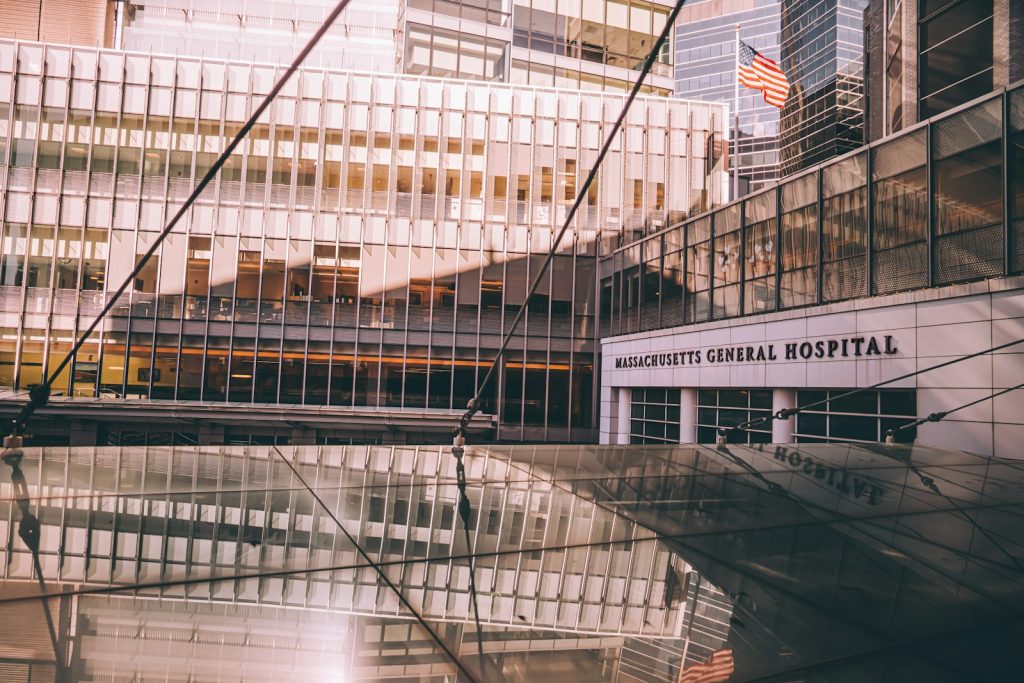
KEK Sanur progress in 2026 is best summarised in two numbers that most agency guides still have not updated: cumulative realized investment of IDR 5.37 trillion and 5,444 people employed, reported at the national KEK evaluation level. That is the most current aggregate figure in circulation for the zone established by PP No. 41 Tahun 2022. It also puts Sanur well ahead of its newer Bali counterpart, KEK Kura Kura, which stood at IDR 1.62 trillion realized and roughly 2,100 jobs at the same measurement point in April 2026. This page is a progress audit — what is realized, what is partially open, what is still unverified, and why two different government portals publish two very different headline targets for the same zone. The companion overview is at /kek-sanur/.
Realization Scorecard: Where Sanur Stands
The IDR 5.37 trillion figure is a cumulative realized-investment total, meaning money that has been committed and deployed into physical infrastructure, equipment, and operations inside the 41.26-hectare site in Denpasar Selatan. It is not a target; it is what has actually been spent or invested in the zone since the groundbreaking period beginning 2021–2022. For comparison, the national KEK program as a whole had attracted approximately IDR 205 trillion across all zones nationally by mid-2024, with Bali’s two zones contributing a combined IDR 6.99 trillion — the large majority of which is Sanur’s share.
The 5,444 employment figure covers direct workers tied to zone operations and construction at the point of reporting. This is meaningful for a zone of only 41 hectares. For reference, KEK Kura Kura covers 498 hectares — more than twelve times the land area — and has reached roughly 2,100 jobs. The Sanur density reflects the fact that a functioning hospital and hospitality redevelopment project generates more immediate employment per hectare than a greenfield tech-and-retail buildout at an earlier phase.
What these numbers do not tell you: they do not break down investment by asset (how much is BIH versus the hotel versus civil works), and they do not indicate the run-rate for 2026 versus earlier years. The Dewan Nasional KEK evaluation reports that produce these figures are not publicly published in granular form. Anyone running a detailed financial model should request updated data directly from the Administrator KEK Sanur.
The Two Official Target Sets — Cited Fully, With Sources
This is the discrepancy that any serious researcher hits within the first hour of zone due diligence, and almost no published guide addresses it directly. There are two official investment and jobs target sets for KEK Sanur in active circulation, sourced from two different government portals:
| Source | Investment Target | Jobs Target | Horizon |
|---|---|---|---|
| Kemenko Perekonomian (ekon.go.id) releases | IDR 10.2 trillion | 43,647 | To 2045 |
| kek.go.id zone profile page | IDR 6.2 trillion | 18,375 | Not specified |
The gap is not trivial: roughly 40 percent on the investment number, and more than double on the jobs count. This site will not reconcile the discrepancy by selecting one version and quietly discarding the other, because we have not found a primary-source document that explains it. The most plausible interpretation is that the two figures reflect different scope definitions — possibly direct jobs versus direct-plus-indirect-plus-induced, or different phase-gate breakpoints — but neither portal has published a methodology note clarifying the difference. A third possibility is that the kek.go.id page carries an older figure that has not been updated since the Kemenko releases revised the target upward.
For financial modelling, use IDR 6.2 trillion as the conservative case and IDR 10.2 trillion as the official ceiling from the Coordinating Ministry. For due diligence that has legal or investment implications, obtain the current Rencana Induk Pembangunan KEK (RIPP) from the Administrator KEK Sanur directly — that document should carry the authoritative phased targets.
The realized IDR 5.37 trillion against the IDR 6.2 trillion lower-bound target implies the zone has already passed 86 percent of one version of its total investment goal. Against the IDR 10.2 trillion Kemenko figure, it is at 53 percent. Both readings have different implications for how much investment capacity remains open — and for how much developer and government urgency there is to attract new tenants versus managing the assets already under development.
Assets: Open, Partial, and Unverified
Here is the honest asset-by-asset status as of mid-2026, labelled clearly by verification confidence:
Bali International Hospital (BIH) — Soft-Opened
BIH is the anchor asset. Operated by PT Pertamina Bina Medika IHC (Indonesia Health Corporation), the hospital was groundbroken by President Jokowi on 27 December 2021 — slightly ahead of the formal PP designation in November 2022. BIH’s own materials cited a soft opening in April 2025. The facility is a 250-bed hospital with four Centers of Excellence: oncology, neurology, cardiology, and orthopedics. The oncology infrastructure includes a 3T MRI, a linear accelerator (LINAC), and 3D brachytherapy capability — a clinical equipment set that is rare in most Indonesian provincial hospitals and that directly addresses the outbound oncology cohort that the zone’s patient-capture thesis depends on.
The Mayo Clinic collaboration was announced at the December 2021 groundbreaking. Its contractual scope — clinical protocol partnership, education and training MoU, or a deeper operational arrangement — remains unconfirmed in primary-source documents available at the time of writing. The collaboration is real as an announcement; the depth of its current form is not publicly confirmed and should be verified with IHC directly before citing in investor materials.
One important status caveat: a claim circulating in 2025 that President Prabowo officially inaugurated the hospital in June 2025 could not be confirmed against Setkab records or major news archives at the time this page was written. We do not publish an inauguration date or officiant we cannot verify against a primary source.
The Meru Sanur — Reopening Date Unverified
The former Grand Inna Bali Beach occupies a central part of the 41-hectare site. The rebrand and repositioning as The Meru Sanur — a premium health-adjacent hospitality product — is part of the zone master plan. The reopening date is not confirmed in sources we have reviewed. Secondary agency sites reference it as an in-progress redevelopment; no primary-source completion timeline is available. Anyone tracking this asset for hospitality or MICE investment planning should contact the InJourney Hospitality team or the Administrator KEK Sanur for current status.
Bali Beach Convention Center — Opening Date Unverified
A MICE convention facility targeting the health-sector congress and event market is part of the zone plan. Some secondary sources cite a 2,000-person capacity; that figure is not verified against a primary document. Opening timeline is not confirmed. The MICE layer matters for the zone’s economics: high-spend medical conference delegates are a significant revenue stream in Penang and Singapore’s health-tourism clusters, and the convention center is intended to attract that segment to Sanur. Its operational status is something to watch in the 2026–2027 window.
Ethnomedicinal Botanical Garden — In Plan, Species Count Omitted
A dedicated ethnomedicinal and botanical garden is part of the zone concept, positioned to support integrative medicine and wellness offerings. It is a genuine differentiator — the combination of clinical excellence and traditional Indonesian botanical medicine is a positioning angle that Penang and Bangkok cannot directly replicate. The garden exists in the zone plan; its current development status is not confirmed in primary sources. Secondary agency sources have circulated species counts; we omit those figures because we cannot verify them against a botanical inventory. The concept is real; the delivery timeline is what needs tracking.
Commercial and MSME Arcades
Small commercial units for local businesses, pharmacies, medical suppliers, and support services are part of the zone’s socioeconomic inclusion framework — a standard element of the KEK social-responsibility mandate. These are lower-profile in investor reporting but operationally important: a functioning ecosystem around BIH requires accessible pharmacy, medical supplies, and patient-support services within the zone perimeter.
Thinking about a health-sector entry — clinic, diagnostics, wellness, health-tech — and want to understand the tenant pipeline and space availability? Use the enquiry form on our contact page or reach us on WhatsApp. We can direct you to the Administrator KEK Sanur and help map your sector fit before a site visit costs you significant management time.
Patient-Flow Targets: The 123,000–240,000 by 2030 Claim Unpacked
The patient-capture target that Kemenko Perekonomian documents cite for 2030 is 4 to 8 percent of the Indonesian cohort currently seeking treatment abroad. Under the modelling assumptions used, that translates to approximately 123,000 to 240,000 patients per year by 2030. This is the number that appears in the zone’s economic case and in most agency coverage of KEK Sanur.
Understanding what it actually demands is useful. The “4 to 8 percent” framing comes from broader official-statement context — figures cited by Jokowi and Luhut in speeches referenced two million Indonesians travelling abroad for treatment per year and foreign-exchange outflows in the range of US$6 billion annually. Those speech-derived figures are not in the formal KEK Sanur zone documents; we attribute them as officials’ statements, not zone-target data. The 123,000–240,000 patient figure is the one that appears in ekon.go.id release materials.
By 2030, BIH would need to reach the high end of that range purely on its own at 250 beds, which implies very high occupancy and patient turnover at specialist-procedure volumes. The more likely reading is that the target assumes BIH plus additional health operators entering as zone tenants over the next four years. As of mid-2026, BIH is the primary confirmed clinical operator; the pipeline of additional co-located health facilities is not publicly confirmed.
Regional context for scale: Malaysia’s Penang health cluster processed over one million foreign patients annually in the years before COVID. Bangkok’s JCI-accredited hospitals number more than twenty. Those are decades-built positions. The Sanur thesis is not to replicate them within five years — it is to capture the Indonesian domestic market that currently exports health spending, where proximity, language, and familiarity are advantages that regional incumbents cannot match. That is a defensible and achievable niche. The 2030 target at the higher end of the range requires aggressive ramp; the lower end (123,000 patients) is meaningful progress if the broader health ecosystem builds out on schedule.
Sanur vs Kura Kura: Realization in Context
The comparison between the two Bali zones at the same April 2026 measurement point is instructive for understanding where each zone actually sits in its development arc:
- KEK Sanur — Realized investment: IDR 5.37 trillion | Jobs: 5,444
- Earlier designation (November 2022 PP), focused anchor tenant (BIH/IHC), smaller footprint (41.26 ha), active redevelopment of an existing hospitality asset (Grand Inna). The concentrated, single-vertical focus has driven faster realization per hectare.
- KEK Kura Kura — Realized investment: IDR 1.62 trillion | Jobs: ~2,100
- Later designation (April 2023 PP), greenfield on 498 hectares, multiple sectors (tourism + creative industry), longer infrastructure buildout horizon. ACS school opened August 2025; Grand Outlet Bali targeting mid-2026 soft opening; marina and hotel under construction. The multi-sector, large-footprint model generates slower early realization but a larger eventual target (IDR 104 trillion by 2052 on the long horizon).
Neither comparison should be read as one zone “winning.” They are different products for different investors. Sanur’s faster realization reflects the nature of a hospital and hotel redevelopment — capital-intensive, operationally immediate, narrowly focused. Kura Kura’s slower start reflects the reality of building an entirely new district on reclaimed land, with a multi-decade master plan. The IDR 1.62 trillion Kura Kura has realized is roughly 1.5 percent of its IDR 104 trillion long-run target; Sanur’s IDR 5.37 trillion is 53 to 87 percent of its target depending on which official figure you use.
What Investors and Operators Should Watch Through 2027
The progress story for KEK Sanur between now and end-2027 will be defined by a handful of specific milestones. Not targets — specific, verifiable events:
- BIH service confirmation and occupancy reporting. IHC needs to publish — or report to regulators — which clinical services are accepting patients and at what utilisation rate. The soft-opening label covers a wide range of operational reality.
- Mayo Clinic collaboration scope clarification. Clinical protocol integration versus a training-and-standards MoU is a meaningful distinction for clinical credibility claims and for foreign patient referral networks.
- Convention center and Meru Sanur opening timelines. The MICE and hospitality layer drives patient-companion spend and the medical conference segment — both important for zone revenue per visitor.
- Additional tenant announcements. BIH alone cannot serve 123,000 to 240,000 annual patients at 250 beds. The pipeline of co-located diagnostics labs, specialist clinics, and wellness operators will determine whether the patient-flow target is achievable.
- Foreign physician licensing in practice. The KEK enabling framework includes facilitated licensing for foreign health workers. Whether the Ministry of Health and IDI translate that facilitation into a functional rapid-pathway — rather than the standard friction-heavy process — will affect every clinical operator’s staffing model.
- Annual Dewan Nasional KEK evaluation. PP 40/2021 gives the National SEZ Council evaluation and revocation powers. KEK Sanur’s trajectory looks healthy relative to peers, but the formal evaluation is worth monitoring for any performance-against-target flags.
Ready to dig deeper on any of these milestones or map a specific investment or tenant entry? use our enquiry form, reach us via the contact page, or message on WhatsApp for a quicker exchange. We connect you with vetted partners who have direct KEK Sanur experience. If you proceed with a partner they may pay us a referral fee — that does not change what we publish.
Frequently Asked Questions
What is the current realized investment at KEK Sanur in 2026?
Cumulative realized investment at KEK Sanur stood at IDR 5.37 trillion with 5,444 people employed as of the April 2026 national KEK evaluation reporting point. This is the most current aggregate figure available from national-level KEK performance reporting; it is not broken down by asset or by year in publicly accessible documents. For current-year figures, contact the Administrator KEK Sanur directly.
Why do ekon.go.id and kek.go.id show different investment targets for KEK Sanur?
Two official target sets are in circulation: Kemenko Perekonomian releases (ekon.go.id) cite IDR 10.2 trillion investment and 43,647 jobs to 2045, while the kek.go.id zone profile page shows IDR 6.2 trillion and 18,375 jobs. Neither source has published a methodology note explaining the difference. The most likely cause is different scope definitions — direct jobs versus direct-plus-indirect, or different phase breakpoints. This site cites both with sourcing rather than picking one. For authoritative phased targets, request the RIPP document from the Administrator KEK Sanur.
Has Bali International Hospital fully opened?
BIH’s own materials referenced an April 2025 soft opening. The hospital is a constructed, equipped facility with 250 beds and four Centers of Excellence (oncology, neurology, cardiology, orthopedics). We cannot confirm from independent primary sources which specific clinical services are currently accepting patients at full capacity. Contact BIH directly at bih.id or ask via our enquiry form for current operational status.
Is The Meru Sanur open?
The former Grand Inna Bali Beach is being repositioned as The Meru Sanur as part of the zone redevelopment. The reopening date is not confirmed in sources reviewed for this page. Secondary agency guides have referenced it as in progress; primary-source confirmation of opening dates is not available. Contact InJourney Hospitality or the Administrator KEK Sanur for current status.
What is the 123,000–240,000 patient target, and is it realistic?
Kemenko Perekonomian’s zone documents project that by 2030 KEK Sanur will capture patients representing 4 to 8 percent of the Indonesians who currently seek treatment abroad — modelled at 123,000 to 240,000 patients per year. The lower end is achievable if BIH reaches operational scale and additional health operators enter the zone as tenants over the next four years. The upper end requires a broader clinical ecosystem well beyond the current 250-bed anchor hospital. Regional benchmarks — Penang processed over one million foreign patients annually pre-COVID — show the target is not unreasonable over a multi-year horizon but is far from automatic given Indonesia’s medical-tourism market is still early-stage compared with Malaysia and Thailand.