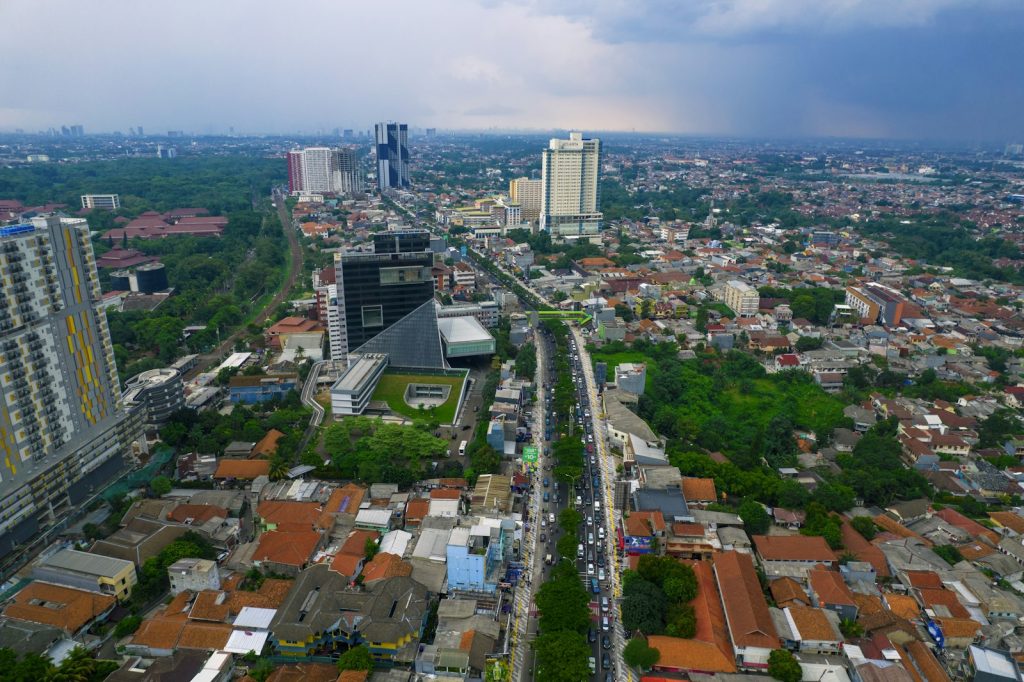
The Bali International Hospital (BIH) and Mayo Clinic partnership refers to a collaboration announced at BIH’s groundbreaking ceremony on 27 December 2021, when President Joko Widodo broke ground on the hospital inside KEK Sanur. Mayo Clinic — the US-based nonprofit academic medical centre consistently ranked among the world’s top hospitals — was named as a collaborating institution. What the collaboration actually covers in operational terms: that detail has not been publicly disclosed in any primary-source document we have been able to verify.
That gap matters. The association carries real weight for BIH’s medical-tourism credibility, and for patients or investors evaluating the facility. This piece sets out what is documented, what is unknown, and what hospital collaboration agreements of this type typically — and typically do not — mean.
What Is Documented About Bali International Hospital
BIH sits inside KEK Sanur, the 41.26-hectare health and tourism Special Economic Zone in Denpasar Selatan designated by PP No. 41 Tahun 2022 (signed 1 November 2022). The zone’s primary mandate is medical tourism: capturing a share of the estimated 123,000 to 240,000 Indonesians who seek treatment abroad each year and redirecting that healthcare spending — and the foreign exchange it generates — back into the country.
The hospital’s operator is IHC (PT Pertamina Bina Medika), the healthcare subsidiary of Pertamina. IHC manages a national hospital network and was selected as the health-cluster anchor for KEK Sanur. BIH’s own published materials state a capacity of 250 beds and list four Centers of Excellence: oncology, neurology, cardiology, and orthopedics. Equipment references in IHC materials include 3-Tesla MRI, a linear accelerator (LINAC) for radiation oncology, and 3D brachytherapy — a configuration that would position BIH at the tertiary-care end of the market rather than the medical-check-up segment that dominates regional medical-tourism flows.
BIH materials indicate a soft opening in April 2025. A subsequent presidential inauguration has been reported in some media, but we have not been able to confirm the date or officiant against Setkab or official presidential archive records; we do not publish that claim.
The Mayo Clinic Announcement: What It Said and What It Didn’t
At the December 2021 groundbreaking, Mayo Clinic was named as a collaborating partner. The announcement generated substantial press coverage — and understandably so. Mayo Clinic’s brand recognition among high-net-worth patients in Southeast Asia, the Middle East, and China is significant. Its name on a facility signals a level of clinical ambition that distinguishes BIH from the dozens of private hospitals across Bali and Lombok that cater to expatriate and tourist walk-in demand.
However, the scope of the agreement — whether it is a clinical affiliation, an education and training MoU, an advisory arrangement, a quality-standards licensing deal, or some combination — has not been disclosed in any document available to this publication. We have reviewed IHC press releases, BIH’s own web materials, and government KEK Sanur documentation. None specifies the agreement’s content.
This is not unusual for hospital collaboration announcements. It is also not a reason to dismiss the relationship. What it means is that you should not read the name Mayo Clinic as implying any particular service standard, staffing model, or treatment protocol unless the hospital publishes specifics and those specifics are verifiable.
What Hospital Collaboration Agreements Typically Do — and Don’t — Mean
International hospital-to-hospital collaboration agreements come in several forms, and the gap between the most and least substantive is wide. It is worth understanding the spectrum before interpreting any announcement.
- Clinical affiliation or joint-operation agreement
- Mayo Clinic or its staff directly participate in clinical care, second opinions, tumour boards, or telemedicine review. This is the most substantive type. It requires detailed staffing, liability, credentialing, and regulatory arrangements. It is also rare in cross-border agreements with a new hospital in a non-US jurisdiction.
- Education and training MoU
- Staff from BIH/IHC attend Mayo Clinic training programmes, fellowships, or curriculum workshops. Mayo Clinic provides faculty for in-country training. This is common, meaningful for quality development over time, but does not directly govern the clinical care a patient receives on day one.
- Advisory or consulting agreement
- Mayo Clinic consultants advise on hospital design, clinical protocols, or management systems during the build and launch phase. Common for flagship greenfield hospitals. Ends or transitions once the facility is operational.
- Brand licensing or quality-mark agreement
- The hospital is permitted to reference Mayo Clinic in marketing under defined conditions, often linked to meeting specified quality benchmarks. Mayo Clinic does operate international programmes of this type. Meaningful as a quality signal, but distinct from Mayo Clinic running or staffing the facility.
- Medical record or referral protocol
- Formalised pathway for complex case referrals from BIH to Mayo Clinic in the US, or for Mayo Clinic to receive BIH patients. Practically valuable for tertiary oncology or neurology cases but limited in scope.
Crucially: none of these arrangements involve Mayo Clinic owning, operating, or being financially accountable for BIH. That is true of almost every international hospital collaboration in Asia. The operating entity at BIH is IHC. Clinical responsibility rests with IHC’s licensed physicians and management. Mayo Clinic’s involvement, whatever its exact scope, does not transfer that accountability.
If you are a patient evaluating BIH, the right question to ask is not whether Mayo Clinic is involved, but rather: which specific protocols, training programmes, or quality frameworks derived from the collaboration are in place — and how are they independently verified?
Why the Brand Association Matters Anyway — The Medical-Tourism Credibility Calculus
Set aside the definitional questions for a moment. From a market positioning standpoint, the Mayo Clinic name does real work for BIH — and for KEK Sanur’s broader ambition to compete with Singapore, Bangkok, and Kuala Lumpur for Indonesian and regional healthcare spend.
The competitive context is stark. Indonesia loses an estimated US$6 billion per year in healthcare-related foreign exchange as patients seek treatment abroad. Patients who make that journey — typically for oncology, cardiac surgery, neurology, and orthopedics, exactly BIH’s declared Centers of Excellence — are not choosing Singapore’s Gleneagles or Bangkok’s Bumrungrad because those hospitals are marginally cheaper. They are choosing them because the brand architecture of those facilities — JCI accreditation, named international affiliations, English-language navigation, consistent quality systems — reduces uncertainty for patients facing high-stakes decisions.
Uncertainty reduction is the core product in serious medical decisions. A patient with a new cancer diagnosis weighing treatment in Bali versus Singapore is not primarily a price-sensitive consumer. They are managing fear and risk. Any credible signal that BIH operates to an internationally recognised standard shifts that calculus.
This is why the Mayo Clinic association, even at an MoU level, is strategically valuable for BIH. It signals intent and standard-setting ambition in a way that a generic international-standard-hospital claim does not. The question for patients and for the medical-tourism sector broadly is whether BIH follows through with the operational substance — accreditation milestones, physician credentialing, outcome reporting — that turns a brand association into a clinical trust proposition over time.
The region’s incumbents did not earn their position overnight. Bumrungrad opened in 1980. Gleneagles Singapore has been JCI-accredited since 2003. Malaysia’s Pantai and KPJ networks have decades of international patient volumes behind them. BIH is starting from zero. The Mayo Clinic name helps close part of that credibility gap on day one. The rest is built through clinical performance, transparent outcome data, and patient experience — none of which can be announced at a groundbreaking.
KEK Sanur’s Patient-Volume Targets: Aspiration vs Ramp Reality
KEK Sanur’s official targets, as stated in government economic ministry (Kemenko Perekonomian) releases, include capturing 4 to 8 percent of the Indonesians currently seeking treatment abroad — a range of 123,000 to 240,000 patients — by 2030. The zone targets a total investment of IDR 10.2 trillion and 43,647 jobs over its full horizon to 2045.
One candour note: there are two conflicting official figure sets in circulation. The Kemenko Perekonomian release cites IDR 10.2 trillion investment and 43,647 jobs. The kek.go.id zone profile page lists IDR 6.2 trillion and 18,375 jobs for the same zone. We cite both because the discrepancy exists and readers planning on these numbers deserve to know it.
The 140,000-patient figure that appears in agency guides and media coverage is derived from the midpoint of those government targets. It is a planning target, not a trajectory. Medical-tourism ramps are slow. A new hospital with strong brand associations still needs three to five years of patient-volume accumulation before it can meaningfully point to outcome data. The supply side — the hospital opening — is the easy part. The demand side involves convincing Indonesian patients and their physicians that BIH is a credible alternative to flying to Singapore, changing a healthcare behaviour that has been entrenched for a generation.
There are friction points specific to the Indonesia context. Foreign physician licensing via the Indonesian Medical Council (IDI) has been a recurring point of negotiation for KEK Sanur — regulations allow facilitation for foreign doctors in the zone, but implementation details affect how quickly BIH can assemble the specialist roster that its Centers of Excellence require. Out-of-pocket pricing at a facility targeting international patients will also sit well above BPJS (national health insurance) reimbursement rates, which limits domestic volume to self-pay segments.
None of this is a dealbreaker for BIH’s long-term potential. It is the honest ramp picture. If you are evaluating KEK Sanur as an operator, investor, or healthcare professional, our medical tourism operator playbook for Sanur SEZ covers the licensing pathway, patient-volume economics, and competitive benchmarking in more detail. use our enquiry form, or reach out via WhatsApp — we can connect you with vetted partners who know this zone on the ground.
What the Partnership Means for the Zone’s Broader Investment Thesis
For operators and investors evaluating KEK Sanur, BIH is the anchor tenant that validates the zone’s health-tourism mandate. A zone designated for medical tourism needs a flagship hospital with credible specialist capacity; without it, the supporting ecosystem — wellness operators, rehabilitation clinics, specialty diagnostic centres, medical hotels, the planned ethnomedicinal botanical garden — lacks a clinical core to orbit around.
The Mayo Clinic association reinforces that anchor role regardless of the agreement’s precise scope. It makes it easier for secondary tenants — the clinic operators, wellness brands, and healthtech companies that would complete the ecosystem — to position their own facilities credibly within a zone that has an internationally recognised name attached to its lead institution.
From a fiscal incentives standpoint, the zone’s KEK designation (PP No. 41 Tahun 2022) provides the standard national KEK package: tax holiday on corporate income tax for 10 to 20 years based on investment size (IDR 100 billion threshold for the shortest holiday, up to 20 years for investments of IDR 1 trillion or above), VAT and luxury goods tax not collected on qualifying transactions, customs duty exemption on medical equipment imports, and immigration facilitation for foreign medical professionals and patients. The full KEK Sanur profile and our tax incentives breakdown cover the specifics and the Pillar Two caveats that matter for larger corporate groups.
The Direct Answer: What We Know and What Remains Unverified
Documented facts:
- BIH groundbreaking took place on 27 December 2021, witnessed by President Jokowi.
- Mayo Clinic was named as a collaborating institution at that event. VERIFIED.
- BIH is operated by IHC (PT Pertamina Bina Medika), not by Mayo Clinic.
- BIH has 250 beds and four declared Centers of Excellence: oncology, neurology, cardiology, orthopedics.
- BIH materials indicate a soft opening in April 2025.
Not publicly confirmed:
- The specific scope of the Mayo Clinic agreement — clinical, educational, advisory, quality-mark, referral pathway, or combination.
- The current operational depth of the collaboration post-opening.
If you are making a decision — as a patient, a clinician, an investor, or a prospective operator — that depends on the nature of the Mayo Clinic involvement, ask BIH directly for the specifics. A hospital confident in its international partnerships should be able to answer that question clearly. Plan your visit or investment with our concierge, or message us on WhatsApp — we follow BIH’s development closely and can point you to the most current publicly available information.
Frequently Asked Questions
Is Bali International Hospital operated by Mayo Clinic?
No. BIH is operated by IHC (PT Pertamina Bina Medika), a Pertamina subsidiary and Indonesia’s largest government-linked hospital network. Mayo Clinic was announced as a collaborating institution at the December 2021 groundbreaking. The specific scope of that collaboration has not been publicly disclosed. Mayo Clinic does not own, manage, or hold financial accountability for BIH.
What are BIH’s main medical specialties?
BIH’s published Centers of Excellence are oncology, neurology, cardiology, and orthopedics. Equipment referenced in IHC materials includes 3-Tesla MRI, a linear accelerator for radiation oncology, and 3D brachytherapy — positioning the facility in the tertiary-care segment rather than the routine health-check market that dominates medical-tourist volumes in Thailand and Malaysia.
How does BIH compare to hospitals in Singapore or Bangkok for a serious diagnosis?
The regional incumbents — Bumrungrad in Bangkok, Gleneagles and Mount Elizabeth in Singapore — have decades of international patient volumes, JCI accreditation histories, and published outcome data. BIH opened softly in 2025 and is building that track record from the start. The Mayo Clinic association and KEK Sanur’s incentive framework give it a credible foundation, but closing the credibility gap with established regional centres takes years of clinical performance, not a press announcement. For a time-sensitive diagnosis, ask BIH for its current accreditation status and specialist roster before committing.
Can foreign doctors work at BIH inside KEK Sanur?
KEK Sanur regulations include provisions for facilitated licensing of foreign healthcare professionals, recognising that a credible international medical-tourism hub needs internationally trained specialists. The pace of implementation — how quickly foreign physicians obtain Indonesian Medical Council recognition within the zone — is subject to ongoing negotiation between the zone administrator, IHC, and regulatory bodies. Ask the KEK Sanur administrator or BIH directly for the current position before making relocation plans.
Is investing in KEK Sanur as a clinic or wellness operator viable?
KEK Sanur offers a genuine combination of fiscal incentives (corporate income tax holiday, customs facilitation on medical equipment, VAT non-collection) and positioning advantages (anchor hospital, government-backed patient-capture targets, medical-tourism zone mandate). The honest risks: patient-volume ramp to 123,000-plus by 2030 requires significant behaviour change; foreign doctor licensing friction affects specialist team assembly timelines; and the two conflicting official investment-target figures in circulation suggest planning numbers should be treated as directional. No one can pay to change what we publish here; if you use our free help and proceed with a partner we introduce, they may pay us a referral fee at no extra cost to you. use our enquiry form to start the conversation.