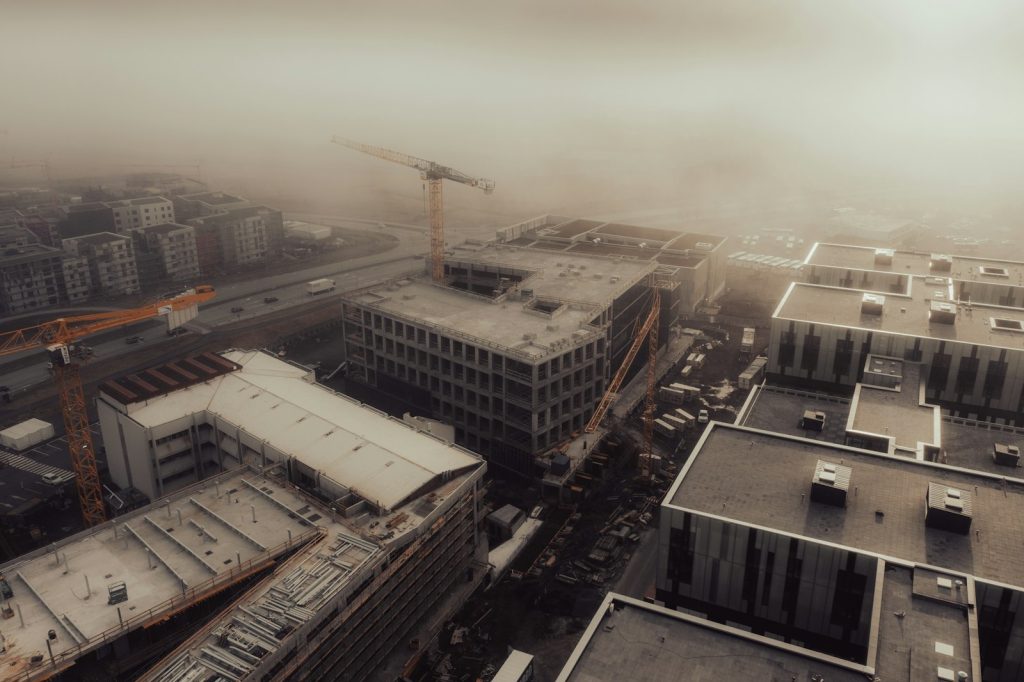
The Kura Kura Bali masterplan is the spatial and phasing framework for a 498-hectare Special Economic Zone on Serangan Island, developed and managed by PT Bali Turtle Island Development (BTID) under PP No. 23 Tahun 2023. The masterplan lays out distinct districts — retail and outlet, education, a planned knowledge hub, residential and marina concepts, and wellness — but the status of those districts in mid-2026 varies sharply: some are built and operating, one is approaching a soft opening, others exist only on paper. This page separates those categories with precision, because conflating a 92%-complete outlet mall with a marina that has no confirmed construction date serves no one doing genuine due diligence.
The formal sectors designated under PP 23/2023 are tourism and creative industry (pariwisata dan industri kreatif). The PP’s elucidation lists: MICE, entertainment and recreation, multimedia content, communication technology, arts and crafts, and fashion. Labels like “tech park” and “knowledge hub” come from BTID’s own masterplan marketing — they are not formal regulatory sector categories. That distinction matters when you are mapping a business activity to a KBLI code for incentive eligibility.
The Zone in Physical Context
Serangan Island sits south of Sanur, connected to the Bali mainland by a causeway. The zone’s developer cites approximately 15 minutes to central Denpasar, 20 minutes to Ngurah Rai International Airport, and 30 minutes to the main resort corridor. Those figures are realistic under normal traffic; peak-hour congestion on the single access road is a practical limitation that infrastructure upgrades in the masterplan aim to address.
The island’s history deserves a sentence. The large-scale reclamation that expanded Serangan’s land area in the 1990s — carried out under a pre-Reformasi development era — drew lasting criticism over coastal erosion and the displacement of fishing communities. PP 23/2023 does not erase that context. Investors and operators considering the zone will encounter it in environmental due diligence and in community relations. BTID’s Tri Hita Karana framing — the Balinese philosophy of harmony between people, nature, and spirit — is the developer’s public answer to that history. Whether it translates into sustained community goodwill is an empirical question, not a marketing claim.
Of the 498 ha, core infrastructure — roads, power, water distribution, and telecommunications backbone — is reported as complete. A figure of 60% of land being development-ready circulates in media coverage; it originates from a single secondary source and should be confirmed directly with BTID before use in any investment document.
How to Read the Masterplan: Four Status Categories
BTID’s masterplan and the various public accounts of the zone mix different stages of delivery. Before district-by-district analysis, it helps to establish a clear taxonomy:
- Built and operating
- Physical structure complete, tenants or users present, open to visitors or students. Verified through multiple independent sources.
- Under construction / near completion
- Physical construction confirmed, structural work advanced, with a near-term opening timeline. Progress figures sourced to secondary editorial — worth confirming with BTID directly.
- Announced / partially commenced
- Groundbreaking, planning approval, or early-stage civil works reported, but no confirmed completion timeline in public sources.
- Master-plan only
- Shown on BTID’s spatial plan or mentioned in policy documents but with no confirmed construction start. Do not treat as live.
The table below applies this framework to every named district and facility in the public masterplan record as of mid-2026.
| District / Asset | Status | Source Confidence |
|---|---|---|
| Core infrastructure (roads, power, water, telecoms) | Built and operating | Multiple sources including kek.go.id updates; high confidence |
| UID Bali Campus (Unity in Diversity) | Built and operating | Verified operational; cultural and civic education centre |
| ACS Bali International School | Built and operating (August 2025) | Anglo-Chinese School Singapore affiliate; IB preschool through high school; verified open |
| The Grand Outlet Bali (Sira Village) | Under construction — ~92% complete, soft opening mid-2026 | JV: BTID × Mitsubishi Estate; single secondary source — confirm with BTID |
| Luxury hotel (~140+ rooms) | Under construction, target Q4 2026 / early 2027 | Operator and brand not named in available sources; timeline is indicative |
| Tsinghua Southeast Asia Center | Announced / status unverified | Part of the knowledge-hub narrative; operational status not confirmed in primary sources — flag before use |
| Azur Bali (residential marina district) | Master-plan / announced concept | Named in developer materials; no confirmed construction start in public record |
| Marina (145-berth capacity) | Master-plan only | No confirmation of construction start in official documents — do not describe as built or under construction |
| International Financial Centre (IFC) | Policy intent only — no regulatory framework | Prabowo government announcement April–May 2026; no enacted law or financial authority established as of mid-2026 |
District 1: Retail and the Grand Outlet Bali
The most commercially advanced district in the masterplan is the retail precinct anchored by The Grand Outlet Bali, internally marketed as “Sira Village.” This is a joint venture between BTID and Mitsubishi Estate, the Tokyo-listed real estate developer. It is positioned as Bali’s first open-air luxury outlet mall — a format familiar from Japan and the United States (think Chelsea Premium Outlets or La Vallée Village outside Paris) but absent in Indonesia until now.
The Mitsubishi Estate involvement brought a portfolio of 100-plus global brands into the development. The names of specific brands are not confirmed in public documents; BTID’s marketing mentions the concept of “world-class brands” accessible at outlet pricing. Mitsubishi Estate’s track record in premium retail real estate — Marunouchi in Tokyo, LaLaport formats across Asia — lends the project institutional credibility. Whether that credibility converts into sustained visitor numbers depends on Bali’s inbound tourism volume and the spending power of domestic visitors, both of which are external variables BTID does not control.
Reported construction progress: approximately 92% complete as of early 2026, with a soft opening targeted for mid-2026. That figure originates from a single secondary editorial source. If you are making a business decision contingent on the Grand Outlet’s opening timeline, verify directly with BTID or the Mitsubishi Estate project office — completion timelines in complex mixed-use developments routinely shift by a quarter or two.
The retail district is arguably the near-term test of the zone’s commercial viability. If the Grand Outlet Bali opens, performs, and generates sustained foot traffic, it validates the zone’s tourism-sector anchor and sets conditions for the hospitality and F&B layers to fill in. If opening is delayed or initial occupancy is thin, the knock-on effects on the hotel and the broader precinct will be visible. Watch the mid-2026 opening closely.
District 2: Education — UID Campus and ACS Bali
Two education-sector assets are already operating, which is significant. Buildings that have tenants and students are fundamentally different from renders on a masterplan.
UID Bali Campus (Unity in Diversity) is a cultural and civic education centre operating within the zone. UID is an Indonesia-based non-governmental organisation focused on intercultural dialogue; its Bali campus functions as a convening space for educational programs, forums, and cultural exchange. It is operational and verified across multiple sources.
ACS Bali International School opened in August 2025. ACS is the Anglo-Chinese School, a Singapore-based institution with a long track record in international education. The Bali campus delivers an International Baccalaureate (IB) curriculum from preschool through high school. For families of zone tenants and expatriate residents in the broader south Bali area, an accredited IB school on-island removes one of the main relocation friction points. The school is verified as open.
BTID’s masterplan groups these assets under a broader “knowledge district” narrative that also includes plans for research institutions and the Tsinghua Southeast Asia Center — reportedly linked to Tsinghua University in Beijing. The Tsinghua connection appears in developer communications and media coverage. Its current operational status is not independently verified in primary sources. This site will not state it as live or operational until that is confirmed. Prospective tenants who are evaluating the zone partly on the basis of a Tsinghua presence should request written confirmation from BTID.
The formal PP sectors do not include “higher education” as a standalone designation. Education activities in the zone map to either the creative industry sector (for content, curriculum, or vocational training activities) or the tourism sector (for hospitality and cultural learning programs). KBLI code alignment for a school or university operator should be confirmed with the Administrator KEK.
District 3: Hospitality — The Unnamed Hotel
A luxury hotel of approximately 140-plus rooms is under construction in the zone, with a target opening of Q4 2026 or early 2027. The operator and brand are not named in any publicly available source as of mid-2026. That is unusual for a project this far along — branded hotel developments typically announce their flag well before opening to drive pre-opening sales and management hiring. The absence of a named operator could mean brand negotiations are ongoing, or that BTID has made a deliberate choice to manage the announcement timing.
140 rooms is a boutique-to-midscale property by luxury resort standards. For context, the Amankila in East Bali has 35 suites; the Mulia Bali has over 500 rooms. 140 rooms in a luxury format suggests a focused, curated product — likely targeting high-spend international leisure travellers consistent with the retail outlet’s positioning. Whether it carries a 5-star international brand flag or operates as a bespoke zone-branded property will affect its distribution and pricing power.
Hospitality is the clearest revenue engine for a tourism SEZ. The retail outlet draws day visitors; a functioning hotel creates stays, anchors F&B, and generates the sustained footfall that secondary tenants need to justify their rents. The hotel’s Q4 2026 / early 2027 target, if met, would coincide roughly with the Grand Outlet soft opening — phased activation of retail and accommodation together is the right sequencing for a zone of this type.
District 4: The Knowledge Hub and IFC Concept
The most forward-looking part of the Kura Kura masterplan is a cluster BTID refers to as the knowledge hub or knowledge district — encompassing research institutions, the Tsinghua Southeast Asia Center, and, more recently, a proposed International Financial Centre.
On the knowledge hub: beyond UID and ACS (both verified operating), the stated ambition is to attract research centres and innovation-economy tenants from Asia and beyond. The Tsinghua Southeast Asia Center is the most specific institutional claim. As noted above, its operational status is unverified. The gap between “announced” and “operating” for institutional academic partnerships is historically wide — MoUs get signed at government summits and then spend years in feasibility stages. Treat any Tsinghua involvement as a positive signal of institutional interest, not as a committed operating presence.
On the Bali International Financial Centre (IFC): in April and May 2026, the Prabowo government announced an IFC concept centred on Kura Kura. The Global Blended Finance Alliance (GBFA) — which held a G20-linked roundtable in Bali — publicly backed the concept. Figures in circulation include US$6.3 billion in projected IFC investment and a “proposed 0% tax rate” for financial centre activities.
The candid position as of mid-2026: no IFC regulatory framework exists. No financial authority has been established. No enacted KEK-specific financial-centre legislation is in force. What exists is a government policy statement and international institutional backing. Comparing Kura Kura to Singapore’s MAS district, Dubai’s DIFC, or Astana’s AIFC on the basis of this announcement is category error. Those centres have decades of case law, regulatory infrastructure, and institutional depth. Kura Kura has a PP for tourism and creative industry, a half-built outlet mall, and a policy announcement. The IFC ambition may be realised — Indonesia has structural reasons to want a financial hub, and Bali’s international brand is a genuine asset — but the distance between an announcement and a functioning financial centre is measured in years and legislative cycles, not months.
We track IFC regulatory milestones on our KEK Kura Kura Bali hub page. When a framework law is tabled, a financial authority is gazetted, or a firm regulatory timeline is published, we will note the date and document number. Until then, the IFC is in the “policy intent” column.
District 5: Residential, Marina, and Azur Bali
The masterplan includes a residential and marina district, referenced in BTID materials as Azur Bali — described as a luxury residential marina concept. The 145-berth marina figure has circulated in coverage of the zone.
The marina’s status requires plain language. There is no confirmation in official documents or verified secondary sources of a marina construction start date, a contractor appointment, or a commissioning timeline. The 145-berth figure appears in a secondary editorial source (balibusinessnews.com) in a forward-looking context. Do not treat the marina as built, under construction, or near operational. It is a master-plan element — shown in the spatial concept, given a capacity figure, but without confirmed physical progress.
The Azur residential concept similarly appears in developer marketing materials. A luxury marina residential district in a Tourism SEZ is a coherent product: PP 23/2023 classifies Kura Kura as a Tourism SEZ, which under the KEK framework gives foreign nationals the right to own a dwelling (strata/apartment unit) within the zone — a genuine legal distinction from the rest of Bali where foreigners cannot hold Hak Milik. That foreign-ownership feature makes a waterfront residential product commercially viable in a way that a non-SEZ development could not replicate.
The timeline for this district is not publicly established. It is reasonable to assume that residential and marina activation follows the completion and occupancy of the retail and hotel precincts — zones typically stage residential last, once the commercial and amenity infrastructure is proven. If you are evaluating Kura Kura as a residential investment, the relevant question is not whether the marina will be built (the masterplan and the legal incentive structure both support it) but when, and under what market conditions.
The Wellness and Lifestyle Layer
Wellness is woven through BTID’s public positioning — references to spa facilities, wellness programming, and lifestyle amenities appear in the developer’s zone narrative. In formal PP terms, these activities sit within the tourism sector: resort amenities, health-and-wellness tourism, and MICE-adjacent programming all map to the pariwisata sector designation.
No standalone wellness district is named in the verified masterplan record with confirmed construction status. The most plausible near-term wellness programming will emerge from the hotel component — 140-room luxury properties at this price point almost invariably include spa and fitness infrastructure. Whether the zone eventually hosts a dedicated wellness operator (a branded medical wellness centre, a longevity clinic, or a retreat campus) depends on tenant recruitment after the retail and hospitality anchors stabilise.
For comparison: KEK Sanur, 15 kilometres away, is specifically designated for health and medical tourism, with Bali International Hospital (IHC + Mayo Clinic collaboration) as its anchor. If your wellness concept has a clinical or medical component, Sanur’s sector designation and the BIH ecosystem are the more natural fit. Kura Kura’s wellness positioning is lifestyle and tourism-adjacent; Sanur’s is clinical. They are not competing for the same tenant.
Investment Targets and Phasing: The Numbers in Context
PP 23/2023 imposed a 36-month ready-to-operate obligation — approximately April 2026. Official targets as published by the government:
- Total investment target (horizon ~2052)
- IDR 104–104.4 trillion (kek.go.id profile cites an older IDR 89.9 trillion figure — both are official; the 104 trillion figure comes from more recent Airlangga Hartarto statements)
- First-five-year target
- IDR 12 trillion (kek.go.id)
- Direct jobs target
- approximately 35,036
- Indirect jobs target
- approximately 64,817
- Forex target
- US$31.8 billion by 2052
Realized progress, sourced to balibusinessnews.com (a single secondary source — treat as directional): approximately IDR 1.62 trillion realized and around 2,100–2,146 jobs created by April 2026. A Ministry of Tourism press release for the first half of 2025 cited IDR 260.96 billion realized in that period — approximately 14.53% of the stated 2025 annual target.
IDR 1.62 trillion against an IDR 104 trillion lifetime target is approximately 1.5% of the endpoint after roughly three years of operation. That sounds alarming taken in isolation; in context it is not unusual for a large-scale greenfield zone in its first phase. KEK Sanur, which had its PP signed five months earlier (November 2022) and has a clearly defined anchor tenant in Bali International Hospital, had realized approximately IDR 5.37 trillion with around 5,444 employed by the same period — roughly three times Kura Kura’s realization on about 8% of the land area. The comparison is useful for calibrating relative pace; it is not a verdict on Kura Kura’s trajectory.
The phasing logic in a masterplan like this runs roughly as follows: core infrastructure first (done), anchor commercial activations next (Grand Outlet and hotel — 2026–2027 target), followed by institutional and knowledge-district tenants (education already running; IFC and research centre TBD), then residential and marina (timeline unconfirmed). Each phase de-risks the next by creating the on-the-ground amenity and commercial environment that makes the next tier of tenants viable. The risk is that slow activation in one phase delays the whole sequence.
What “Tourism SEZ” Means for Foreign Ownership and Incentives
Kura Kura’s classification as a Tourism SEZ (as distinct from a general KEK or industrial KEK) carries specific legal implications that are frequently glossed over in agency guides.
Under the KEK framework, Tourism SEZ tenants and zone property buyers benefit from additional facilities: VAT refunds for tourists on purchases within the zone; PPnBM (Luxury Goods Tax) exemption on dwelling acquisitions; and — this is the key one — the ability for foreign nationals to own a dwelling unit within the zone. Outside a Tourism SEZ, foreigners in Indonesia cannot hold Hak Milik (freehold title). Inside a KEK designated for tourism, foreign ownership of a strata-title dwelling is legally possible. The PT PMA route still applies for investment holding purposes; Hak Pakai is the title form for qualifying individual foreign holders.
On fiscal incentives: the same tax holiday tiers that apply across all KEKs apply here — 10 years for IDR 100–499 billion investment, 15 years for IDR 500 billion to under IDR 1 trillion, 20 years for IDR 1 trillion and above, each followed by a 50% CIT reduction for two additional years. Indirect tax facilities (PPN tidak dipungut, import duty exemption, PPh 22 not collected) apply. Local tax reductions of 50–100% are available under PP 40/2021 Article 100.
A note for large MNE groups: Indonesia’s Pillar Two global minimum tax (PMK 136/2024, effective from income year 2025) imposes a 15% domestic top-up tax on groups with annual revenue exceeding EUR 750 million. If your group is in scope, the KEK CIT holiday’s net value is reduced. Indonesia introduced a Qualified Refundable Tax Credit (QRTC) mechanism as a GMT-compatible path; this requires separate structuring analysis. Our full incentive breakdown is at KEK tax incentives.
Honest Risk Register for the Masterplan
No analysis of this masterplan is complete without flagging what can go wrong. These are not predictions — they are identified risk categories that any investor, tenant, or operator should model.
Activation timing risk. The Grand Outlet soft opening is targeted for mid-2026. Luxury retail outlet projects of this complexity routinely slip by a quarter or two. If the opening is delayed, the hotel’s opening timeline may adjust, and secondary tenant recruitment pauses. Watch the actual opening, not the target date.
Long buildout horizon. The 2052 target date is a 30-year runway. It spans at least three or four full tourism cycles, multiple Indonesian election cycles, and technology shifts that do not yet exist. COVID demonstrated what a black swan event can do to a tourism-dependent SEZ. The masterplan’s ambitions are plausible over that timeframe; they are not guaranteed.
Realization pace. 14.53% of the 2025 annual target in H1-2025 means that, on the available data, the zone was not on track to hit its annual target for that year. That may reflect the normal lumpiness of large-scale investment commitments, or it may indicate structural recruitment challenges. The honest answer is that more data points are needed.
Environmental and community tail risk. Serangan’s reclamation history is a live issue, not a resolved one. Adverse community relations or environmental rulings — while not currently acute — remain a tail risk in Indonesian land-use disputes. Due diligence should include a specific community relations assessment.
Pillar Two GMT erosion. For in-scope MNE groups, the PMK 136/2024 top-up mechanism partially offsets the tax holiday value. This is not a Kura Kura-specific risk; it applies across all Indonesian KEKs. But it is material for larger investors.
IFC regulatory uncertainty. The IFC concept is policy intent without enacted law. Investors who price in a zero-tax financial centre in their feasibility models are pricing in a scenario that does not yet have legal standing.
Zone proliferation. The Prabowo government has signalled ambitions for SEZ designation in more provinces. More competing zones over time can dilute the relative advantage of any single KEK — including Kura Kura.
A fuller risk analysis — including the VoxDev academic evidence on Indonesian SEZ performance and the Dewan Nasional KEK revocation framework — is on our risks and due diligence page.
Masterplan vs Tenant Tracker
The masterplan is the spatial and sectoral blueprint. The tenant list is the real-time evidence of whether that blueprint is attracting occupiers. As of mid-2026, the verified tenant roster is short: UID Campus, ACS Bali, the Grand Outlet JV (approaching opening), and a hotel under construction with an unnamed operator. Tsinghua Southeast Asia Center is unverified. The marina and residential district have no confirmed occupiers.
That is not a failure — it is an accurate picture of a zone in its first operational years. The question for any prospective tenant is whether the current activation level de-risks your entry sufficiently, or whether you need to see the Grand Outlet trading and the hotel open before committing. Both positions are defensible; they reflect different risk tolerances and different time horizons.
For a granular, updated view of confirmed tenants, announced partnerships, and construction progress, see our KEK Kura Kura Bali hub. We update it when official data or credible secondary sources report changes — not on a speculative or press-release basis.
Frequently Asked Questions
What districts does the Kura Kura Bali masterplan include?
The masterplan identifies several distinct precincts: a retail district centred on The Grand Outlet Bali (JV with Mitsubishi Estate); an education district with UID Campus and ACS Bali International School; a planned knowledge hub that includes the Tsinghua Southeast Asia Center (unverified operational status); a residential and marina district branded Azur Bali; hospitality (a 140-plus-room luxury hotel under construction); and lifestyle and wellness programming integrated with the hospitality layer. The formal regulatory sectors under PP 23/2023 are tourism and creative industry — “knowledge hub” and “tech park” are master-plan language, not PP designations.
What is actually built and open at Kura Kura Bali in 2026?
Two assets are confirmed built and operating: the UID Bali Campus (cultural and civic education centre) and ACS Bali International School (opened August 2025, IB curriculum preschool through high school). Core zone infrastructure — roads, power, water, telecoms — is reported as complete. The Grand Outlet Bali is approximately 92% complete with a mid-2026 soft opening target. A 140-plus-room luxury hotel is under construction targeting Q4 2026 or early 2027. The marina and Azur residential district are master-plan elements without confirmed construction starts. The Tsinghua Southeast Asia Center’s operational status is unverified.
Is the Kura Kura Bali marina built or just planned?
The marina — cited at 145-berth capacity in secondary sources — is a master-plan element. There is no confirmation in official documents of a construction start date, contractor appointment, or commissioned timeline. Do not treat it as built or under construction. Investors evaluating a marina-adjacent residential product should request the current construction programme directly from BTID.
What is the status of the Bali International Financial Centre (IFC) at Kura Kura?
The Prabowo government announced a Bali IFC concept in April–May 2026 with Kura Kura as the proposed location. The Global Blended Finance Alliance backed the concept. As of mid-2026, there is no enacted IFC regulatory framework, no financial authority established, and no zone-specific financial-centre legislation in force. The IFC is a policy intent. The current PP 23/2023 designates Kura Kura for tourism and creative industry — not financial services. Any financial operator evaluating a Bali IFC entry should track legislative milestones, not press releases, before committing.
Does the Kura Kura Bali masterplan allow foreign property ownership?
Yes, within limits. Kura Kura is classified as a Tourism SEZ under the KEK framework, which carries a specific entitlement: foreign nationals can own a dwelling (strata-title unit) within the zone, an exception to the general rule that foreigners cannot hold Hak Milik in Indonesia. The applicable title form for individual foreign holders is Hak Pakai; PT PMA holding HGB remains the standard route for investment properties. This right applies only to the dwelling product, not to commercial or operational land. The residential district (Azur Bali) does not yet have confirmed construction status, so this right is forward-dated to when that product launches.